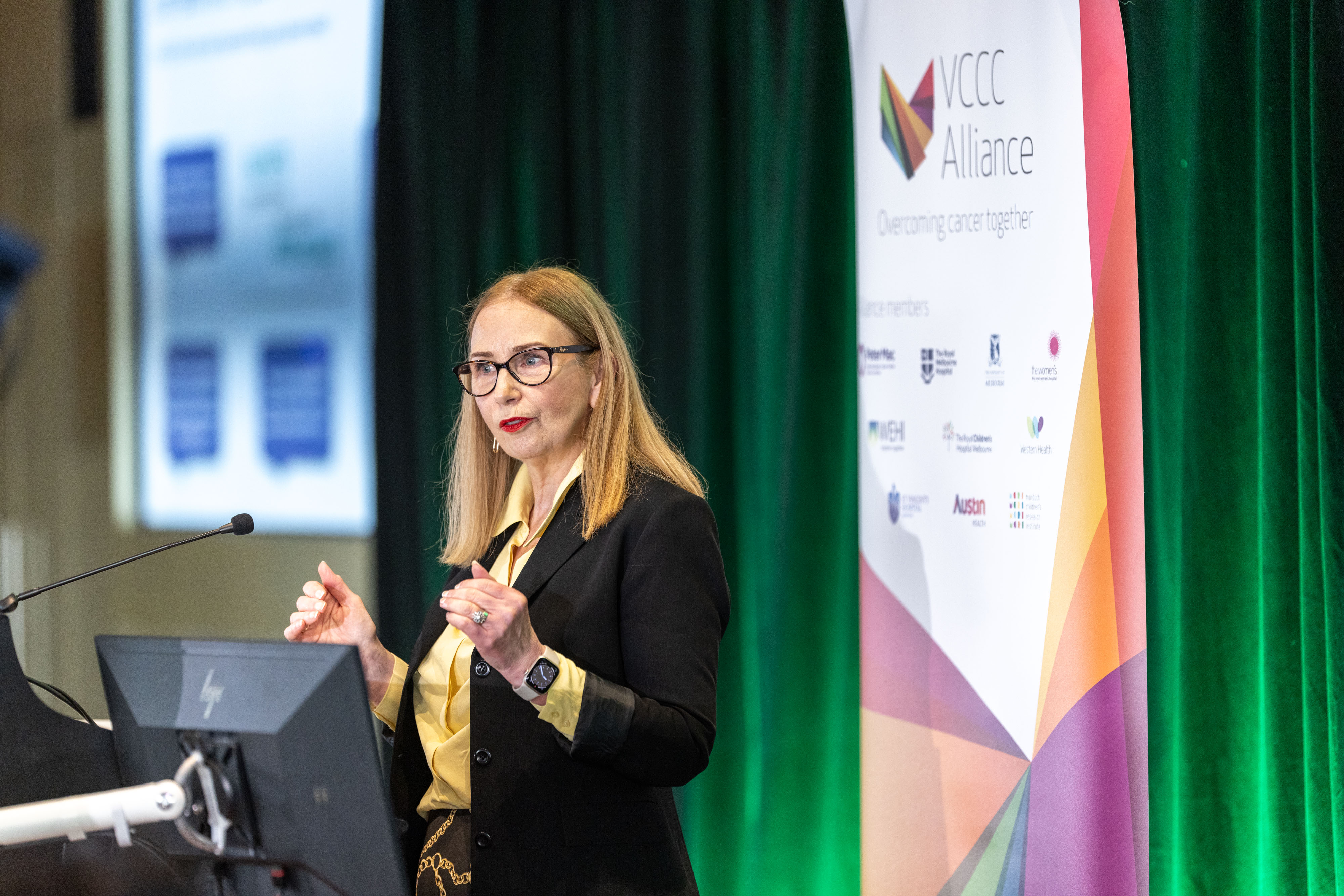


Professor Jennifer Philip is a palliative care specialist at Peter MacCallum Cancer Centre and the Royal Melbourne Hospital. She holds the Chair of Palliative Medicine at the University of Melbourne and St Vincent’s Hospital in collaboration with the Victorian Comprehensive Cancer Centre.
COVID-19 shone a light on the disproportionate load that women took on during lockdown with homeschooling and home care - often at a cost to their paid work and careers. Women were the main carers for centuries before COVID-19 and will continue beyond. The tasks of caring – for children, for the household, for older people are not exclusively but very disproportionately borne by women.
In my work in palliative care, I often meet extraordinary women. Impressive, brave and determined women – almost always quietly going about their business of providing care, ensuring others are comfortable, even flourishing despite what might be very difficult circumstances.
"When Meg smiles her face transforms and fills the room."
Janet is in her 50s and cares for her daughter, Meg, now 28 who has never walked, never spoken and has relied on others for feeding, dressing and personal care all her life. I met Meg at different times when she needed to come to the hospital. Always Janet was at her side – interpreting her needs, advocating and making sure she was comfortable and felt safe. When Meg smiles her face transforms and fills the room. Theirs is a great relationship, and Janet enables Meg to live as fully and lovingly as her circumstances would allow her.
Caring, as Janet cares for Meg – like much of women’s work, is under-recognised. It is estimated that in 2020 informal carers provided an average of 35 hours per week of care, which would cost around $77.9 billion if replaced with formal care. Like much of women’s work it is undervalued.
And make no mistake, it is work. Frequently hard, physical, often 24-hour work. It may also be an act of love – but not always. I have met women who, after a lifetime of abuse, are providing care for the man who made their life miserable; sometimes moving back in with him to provide comfort in his chronic, perhaps terminal illness, while still putting her life on hold.
Providing care frequently takes a toll – there are impacts on caregivers’ physical and psychological health. There are other impacts too – career opportunities lost, income forgone, friends drifting away. But caring can have profound rewards. There can be gifts given in providing and receiving care – moments of profound closeness, a deepening of relationships, new intimacy, even humour and love. So it is complex, it is unsung, unpaid and it is mostly the job of women.
Firstly, we must recognise the caregiving that is occurring – make it visible. It should be on every economic statement and costing study in health care.
Secondly, we must value it. We should value it for the moral act that it is. We must value it for how it keeps our world going. And then we must value it for the economic contribution that women and men who are carers make every day and every night as someone is needing and receiving care.
Next, we must ask and not assume. Too often, decisions about a particular course of action such as returning home from hospital with ongoing complex illness, are made without full consultation and empowerment of those who will provide the actual care. Such decisions must consider who will be the carers and what will that mean? Can the care be shared? And what will others do to support that role?
Then, every carer should be offered support. We should not wait until they ask, for some never will and some may simply not know supports exist. We must be proactive about this.
And lastly, we should celebrate those who care. We should meaningfully acknowledge the work, the hours, the tenderness, and the love with which many care. As a community, we must respect and recognise their efforts and dedication and acknowledge the social and economic contribution to the community that comes from their role as a carer.
Jennifer was recently appointed Co-Chair of the VCCC Strategic Program Steering Group - Program 8 Health Equity.