

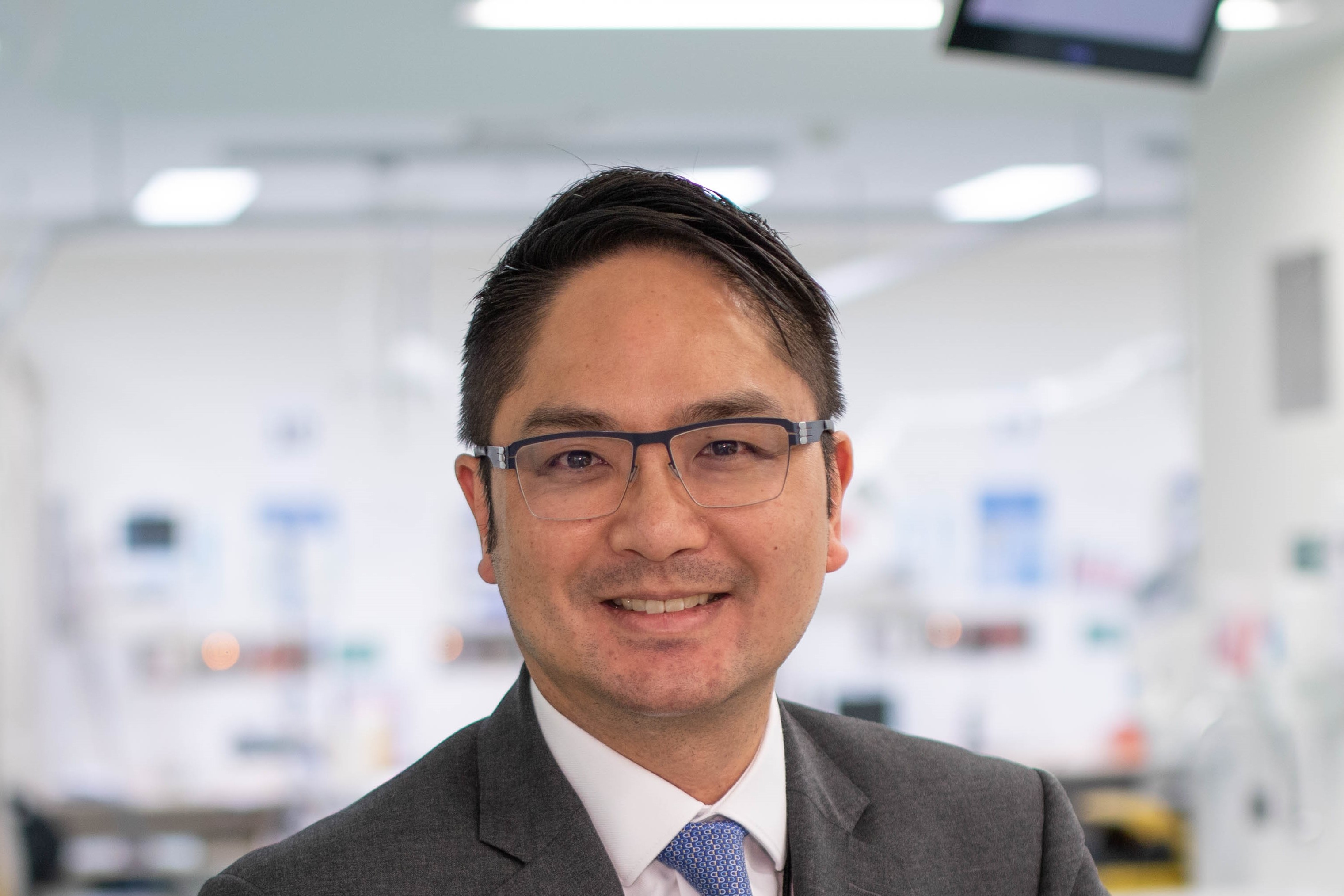
“The VCCC Alliance Lung Cancer Screening Symposium is going to be a fantastic one-stop shop for everyone who has a role to play in the new National Lung Cancer Screening Program, being launched on 1 July,” said Associate Professor Justin Tse, VCCC Alliance’s Deputy Chair, Clinical Education Training Advisory Committee.
“Bringing all of us together in the same room for the whole day will allow us to focus on the lung cancer screening pathway in its entirety,” said A/Prof Tse. “I’m excited to hear about all the moving parts, and how these affect everyone downstream, including the patients.”
A/Prof Tse is an Academic Expert, Cancer Lead, in the Department of General Practice and Primary Care at the University of Melbourne, a General Practitioner, and researcher who completed a thesis in Prostate Cancer Screening in primary care. He is the former Director of Medical Education (Clinical Dean) at St Vincent's Hospital Clinical School, University of Melbourne.
He explained that the symposium will allow GPs who are still learning about the program to ask questions, such as ‘How do we refer people? Are the hospitals setting up new clinics? How will the program be provided to priority patient groups, like Indigenous and rural communities?’
Having amassed an in-depth knowledge of screening programs during his more than 20 years as a GP, researcher and an educator, A/Prof Tse said there are three key focus areas for GPs to ensure the National Lung Cancer Screening Program meets its objectives of identifying lung cancer early and reducing deaths from lung cancer:
“We need to develop new pathways for this program, and education is the key,” said A/Prof Tse, who provided input into some of the NLCSP education materials developed by the Daffodil Centre and Lung Foundation Australia. “There is a lot of online information available for GPs, radiologists, technicians and administrative staff about how to enter details into the registry.”
The National Lung Cancer Screening Program requires the collaboration of a broad range of experts including GPs, primary healthcare workers, hospital imaging department staff and outpatient managers, surgeons, pathologists, nurses, thoracic oncologists, radiation therapists, radiologists, data specialists, administrators, educators, consumer advocates, and policymakers.
We asked A/Prof Tse how he would define success for the program:
“I don’t want statistics to be the only way the success of the program is measured,” he said. “I would say the program has been successful if, in its first year, we have raised awareness with GPs, clinicians, patients and the community. And, we’ve educated colleagues and created a seamless experience for everyone who plays a role, no matter where they sit on the screening program continuum."
“The National Lung Cancer Screening program will be an opportunity to show how teamwork can save lives.”
Associate Professor Justin Tse will present during the ‘Lung cancer screening pathways’ session at the VCCC Alliance Lung Cancer Screening Symposium, at The Florey Institute in Parkville on Friday 23 May. You can register to attend in-person or online here.